
15th Korea Green Innovation Days (KGID)
The 15th edition of Korea Green Innovation Days (KGID 2026) was held on May 6-8, 2026 in Sejong, Republic of Korea and brought together global practitioners, policymakers, and partners to accelerate green growth solutions with clear potential to scale.
KGID is the annual flagship event of the Korea Green Growth Trust Fund (KGGTF). Building on the momentum of past editions, KGID 2026 was organized under the theme: Learning from Korea: Scaling Green Growth for Global Impact.
Korea offers a particularly relevant set of lessons for today’s green growth agenda. It demonstrates how strong public institutions, innovation, industrial capability, and digital solutions can come together to deliver rapid development while advancing resilient pathways. Korea’s experience also shows what it takes to move from policy ambition to implementation by aligning financing, regulation, technology, and delivery systems, and mobilizing partnerships across government, academia, and the private sector.
KGID 2026 elevated these practical lessons and focus on how they can be adapted and replicated in diverse country contexts. The emphasis was on implementation, replication, and partnership driven scale, and highlighted how collaborative approaches across governments, development institutions, and the private sector translate innovation into measurable development outcomes and generated global impacts for green growth.
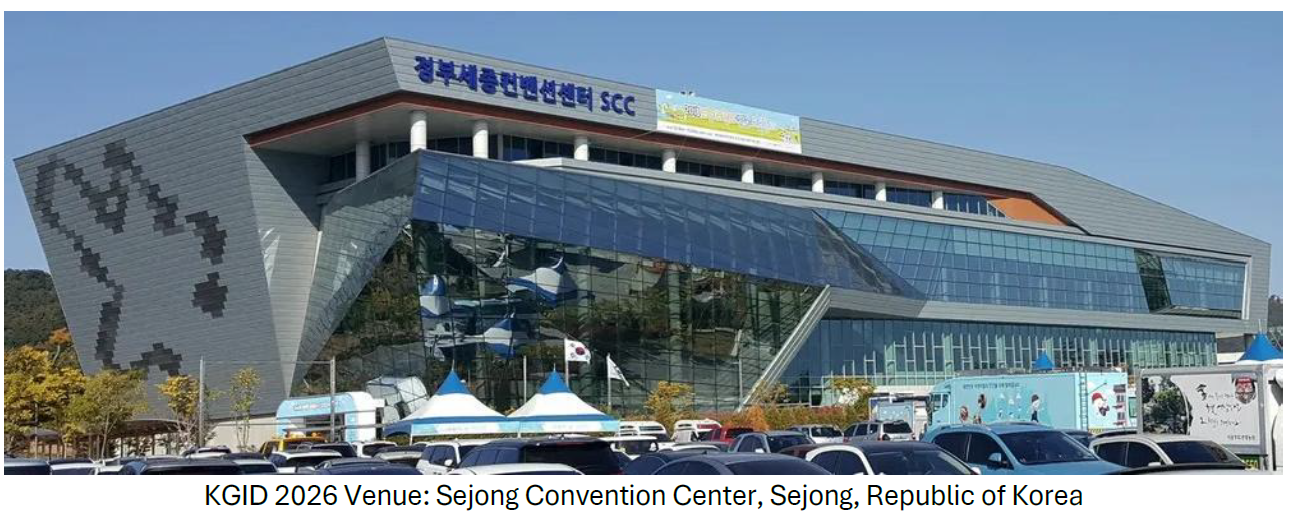
About KGID
KGID convenes World Bank project teams, client countries, Korea partner institutions, and global green growth leaders to exchange knowledge, showcase results, and catalyze new partnerships across seven priority sectors: Agriculture and Food, Digital Transformation, Energy and Extractives, Environment, Transport, Urban, and Water.
Through concrete examples from ongoing KGGTF-supported activities, KGID highlights real-world applications of green growth, demonstrating how policy reform, technology, and institutional partnerships can unlock investment, strengthen capacity, increase productivity, and create jobs.
Since its inception, KGID has been hosted in major global and regional hubs, including Seoul, Washington DC, Dar es Salaam, Cairo, and Jeju, serving as a trusted platform for dialogue between operational teams and solution providers. In 2026, KGID was hosted in Sejong, Korea’s administrative city, offering unparalleled access to government institutions and policy leadership.
Why Sejong
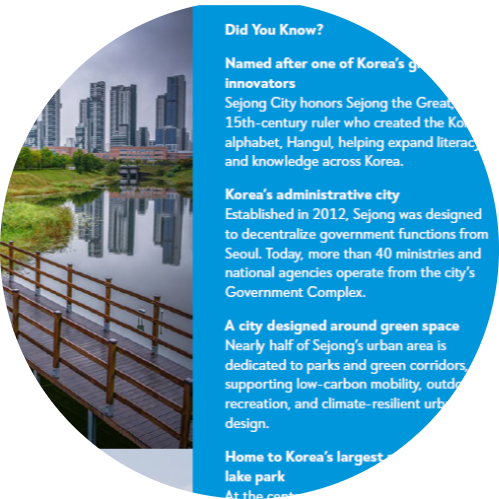
Sejong City, established in 2012 as Korea’s planned administrative city, is the policy hub of the Republic of Korea, home to 23 central government ministries and 22 affiliated agencies, including the Ministry of Economy and Finance, the Ministry of Land, Infrastructure and Transport, the Ministry of Agriculture, Food and Rural Affairs, and the Ministry of Climate, Energy and Environment, as well as 26 national policy research institutes and public institutions such as the Korea Development Institute (KDI).
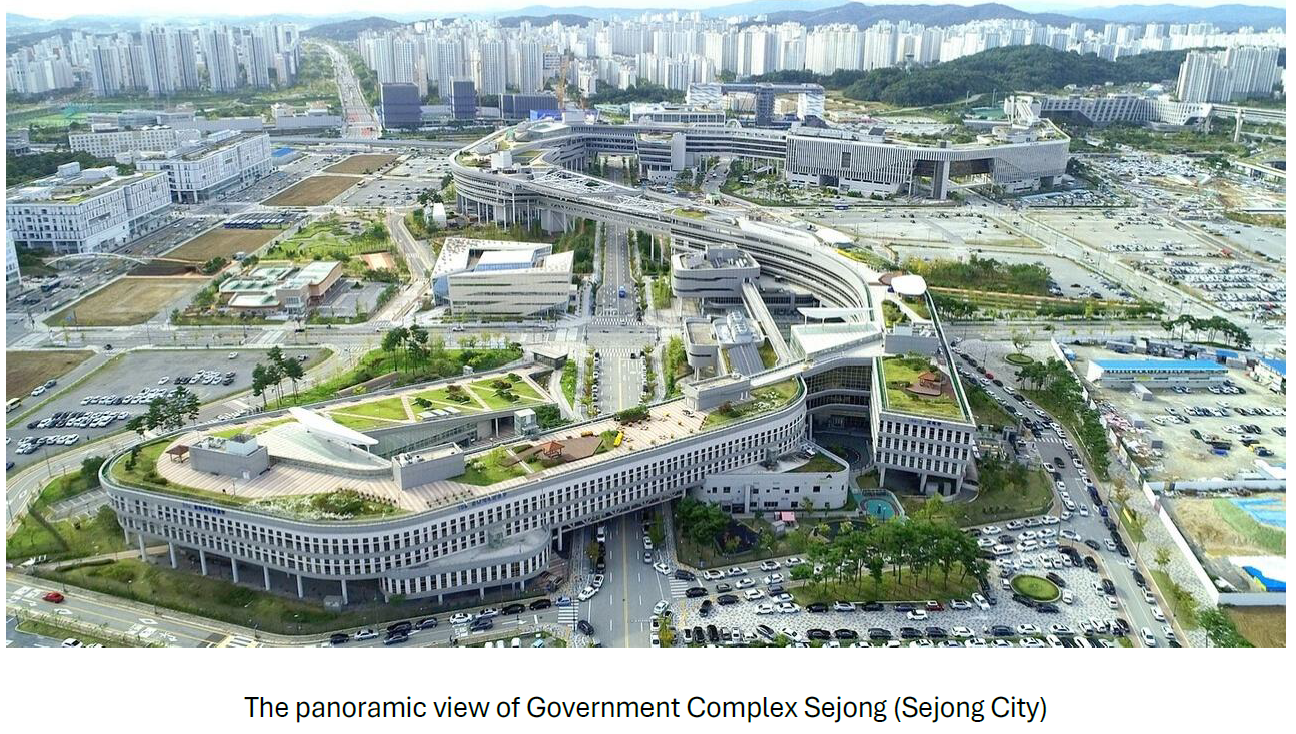
Developed as part of Korea’s national decentralization strategy, Sejong represents a planned, forward-looking urban model, integrating sustainability, smart city solutions, green infrastructure, and innovation-driven growth. Sejong offered a uniquely concentrated governance ecosystem that supports KGID 2026’s theme and purpose by enabling:
-Direct engagement with policymakers and implementing agencies
-Policy-focused knowledge exchange and peer learning
-Exploration of institutional partnerships in a highly concentrated decision-making setting.
Hosting KGID in Sejong, Korea’s administrative city and a fast-growing planned city located about 1–1.5 hours from Seoul reinforced the event’s emphasis on policy-to-practice linkages and partnership-driven scale for global impact.
Breakout Sessions by Sector & Theme
-
Registration
(8:00-8:30) -
Agriculture Session 1
(8:30-9:40)
4F, International Conference Room -
Transport Session
(9:10-10:40)
4F, Banquet Hall 1 -
Energy Session 1
(9:30-10:40)
4F, Banquet Hall 2 -
Youth Session
(9:30-10:40)
1F, Meeting Room 1 -
RDA Session
(9:40-10:40)
4F, International Conference Room
(8:00-8:30)
(8:30-9:40)
4F, International Conference Room
Harnessing Digital Innovation for Smarter Agricultural Systems | (Speakers Bios)
This session explores how digital platforms, remote sensing, and AI-driven tools are transforming agricultural decision-making — from soil intelligence systems to satellite-based crop monitoring. Presenters from the World Bank and Korean institutions will share cutting-edge approaches to building data-driven public infrastructure that supports climate-resilient and precision farming.
Moderator: Sergiy Zorya, Lead Agriculture Economist, World Bank Group
World Bank Grant Teams
- Michael Okoti, Director of Donor Funds and Chief Research Scientist, Kenya Agricultural and Livestock Research Organization (KALRO) - “Strategic Focus of the KGGTF Grant: Green Growth Acceleration: Digital Platforms and Soil Intelligence for Resilient Farming” (Presentation)
- Francisco Javier Bueso Ucles, Senior Agriculture Economist, World Bank Group - “Strategic Focus of the KGGTF Grant: Remote Sensing and AI-Driven Methodology for Corn and Bean Area and Yield Estimation in Honduras: A Pilot in the Departments of Olancho and El Paraíso” (Presentation)
K-Partners
- Ministry of Agriculture, Food and Rural Affairs (MAFRA) - “Smart Farming in Korea: Current Status and Policy Directions with case insights of K-smart farm from Shinhan A-tec Co.”
- Jaehee Eom, Deputy Director, Ministry of Agriculture, Food and Rural Affairs (MAFRA) - “Smart Farming in Korea: Current Status and Policy Directions of Smart Farming” (Presentation)
- Doyun Kim, Global Project Manager, Shinhan A-tec Co. - “The Evolution of K-smart Farm: Bridging the Present to the future”
- Suk-Young Hong, Director, National Institute of Agricultural Sciences, Rural Development Administration (RDA) – “Status and Perspectives of Utilizing Agricultural Satellite” (Presentation)
- Kwang Soo Kim, Professor, National Center for Agro Meteorology (NCAM), Seoul National University - “From SISAGRO to Smart Agricultural Policy: Building Digital Public Infrastructure for Targeted and Climate-Resilient Agriculture” (Presentation)
Q&A / Discussion
(9:10-10:40)
4F, Banquet Hall 1
Smarter Mobility in Practice: Digital Solutions for Smarter, Safer, and Greener Transport | (Speakers Bios)
This session explores how digital technologies can strengthen transport systems to improve safety, efficiency, and sustainability. Drawing on Korea’s experience and World Bank supported projects, speakers will share lessons from implementing intelligent transport systems (ITS), digital rail solutions, and smart urban mobility. The focus is on how these tools can be applied in different countries’ contexts to deliver real improvements in mobility and service delivery.
Moderator: Yoomin Lee, Transport Analyst, World Bank Group
World Bank Grant Teams
- Gladness Mukemfura Rwejumura, Transport Specialist, World Bank Group - “Development of ITS-Led Tanzania Railway System Strengthening Climate Resilient Infrastructure Based on GIS” (Presentation)
- Matthew Brian Gough, Infrastructure Specialist, World Bank Group - “Integrated Solutions for Green Urban Mobility and Smart City Planning to Improve Livability in Kandy City, Sri Lanka” (Presentation)
- Dominic Patella, Senior Transport Specialist, World Bank Group -
“Morocco & Tunisia: Smart, Integrated Ticketing and Data Management” (Presentation)
K-Partners
- Sue Park, Director, ITS Korea – “The Current Status and Future Vision of ITS in Korea” (Presentation)
- Hyun Ah Cho, Senior Manager, Korea Railroad Corporation (KORAIL) – “Digital Transformation in Railway: AI-Driven Safety & Maintenance Innovation” (Presentation)
- Dong Chang Lee, Head of Bus Operations Team, Sejong City – “Integrating BRT and DRT for Inclusive Urban Mobility: The Sejong City Case” (Presentation)
- Sunghoon Kim, Associate Research Fellow, Korea Transport Institute (KOTI) – “Smart City and Smart Mobility Projects in South Korea” (Presentation)
Q&A / Discussion
(9:30-10:40)
4F, Banquet Hall 2
Green Energy Transformation: Driving Decarbonization and Sustainable Solutions | (Speakers bios)
As countries work to expand energy access while advancing climate goals, this session brings together World Bank teams delivering practical, scalable solutions from solar energy expansion to grid digitization and integrated low-carbon transitions. Drawing on experience across Africa, Central and East Asia, speakers will highlight how renewable energy investments, digital tools, and data-driven planning are improving system efficiency, strengthening resilience, and supporting more inclusive energy systems.
Grounded in real operations, the discussion will focus on how adaptable models can accelerate clean energy transitions at scale.
Moderator: Inchul Hwang, Senior Energy Specialist, World Bank Group
World Bank Grant Teams
- Yae Jun Kim, Energy Specialist, World Bank Group - “Digitization of Power Transmission and Distribution System in Kyrgyz Republic” (Presentation)
- Yun Wu, Senior Energy Specialist, World Bank Group - “Accelerating Mongolia Green Energy Transformation: Digitalization, Decarbonization, and Inclusive Access” (Presentation)
K-Partners
- Youngsung Park, General Manager, Korea Electric Power Corporation (KEPCO) - "AI based digitalization in power grid” (Presentation)
- Hanki Kim, Department Head, Distributed Energy Dep’t, Korea Institute of Energy Research (KIER) - “Marine Energy Platform for the Commercialization of OTEC and Seawater Battery Technologies in Papua New Guinea” (Presentation)
Q&A / Discussion
(9:30-10:40)
1F, Meeting Room 1
Shaping the Next Generation of Climate Solutions | (Speakers Bios)
This session spotlights the next-generation professionals driving green growth across sectors and borders. Drawing on Korea’s experience of scaling green growth, young World Bank staff and partners will share their perspectives, exchange approaches across different sectors, and explore how their generation can accelerate the transition from evidence to impact. The session combines short professional spotlights, peer dialogue, and interactive discussion — creating a space where young practitioners connect, inspire each other, and collectively shape the future of green growth.
Moderator: Jie-ae Sohn, Senior Communications Consultant, KGGTF, World Bank Group
Panelists
- Taeho Kim, Consultant, KPOK & Digital Transformation, World Bank Group (Presentation)
- Chanmi Kim, 2025 KGGTF Youth Internship Program (YIP) Alumni & Master’s student, KAIST’s GGGS (Graduate School of Green Growth and Sustainability) - “Navigating Green Growth: A Personal Journey”
- Jihye Kang, 2026 KGGTF Youth Internship Program (YIP) Intern & Researcher, Carbon Neutrality Support Center, Daegu Policy Institute - “From Seawater Samples to Climate Policy: Growing Up with Green Growth and AI” (Presentation)
Discussion/Q&A
- Group Discussion
- Discussion highlights
Internship Certificate Award Ceremony (Photos)
(9:40-10:40)
4F, International Conference Room
Harnessing Tech and Global Synergy to End malnutrition and Secure Food Systems | (Speakers bios)
This session explores how technological innovation and global partnerships can contribute to addressing poverty and malnutrition. It will highlight practical approaches to improving agricultural productivity, food systems, and nutrition outcomes through climate-resilient technologies and evidence-based interventions. Drawing on Korea’s experience, the session will also examine how international collaboration and development programs can support sustainable food production and promote healthier diets.
Moderator: Eunjung Choi, Project Coordinator, Researcher, Rural Development Administration (RDA)
K-Partners
- Hyojung Lee, CEO, E&S Consulting - “Harnessing Nutrition for Sustainable Food Security: Lessons from Korea and ODA Strategic Directions” (Presentation)
- Heeju Lee, Senior Researcher, National Institute of Horticultural and Herbal Science (NIHHS), Rural Development Administration (RDA) - “Development of Cultivation Technology to Increase Onion Productivity in Response to Climate Change” (Presentation)
- Sungyul Chang, Researcher, National Institute of Crop and Food Science (NICS), Rural Development Administration (RDA) - “Image Data-Driven AX Transformation in Open-Field Agriculture” (Presentation)
- Kunchit Judprasong, Head of Food Chemistry Unit and Quality manager of ISO 17025 laboratory, Institute of Nutrition, Mahidol University (INMU) - “Strengthening Food Composition Data Systems: Thailand’s Contributions to AFACI and Global Recognition” (Presentation)
Q&A / Discussion
Breakout Sessions by Sector & Theme
-
Coffee Break
(10:40-11:00) -
Agriculture Session 2
(11:00-12:10)
4F, International Conference Room -
NIGT Session
(11:00-12:10)
4F, Banquet Hall 1 -
Energy Session 2
(11:00-12:00)
4F, Banquet Hall 2 -
Lunch
(12:00-1:30) -
Sectoral Site Visits
(1:30-5:30)
(10:40-11:00)
(11:00-12:10)
4F, International Conference Room
Policy and Practice: Toward Low-Carbon and Targeted Agricultural Development | (Speakers bios)
This session examines how evidence-based policy design and sustainable land management practices can drive more equitable and environmentally responsible agricultural outcomes. Drawing on experiences from Sub-Saharan Africa and Korea, presenters will discuss fertilizer subsidy reforms, low-carbon agriculture, and the role of rural institutions in supporting green growth.
Moderator: Francisco Javier Bueso Ucles, Senior Agriculture Economist, World Bank Group
World Bank Grant Teams
-
Sergiy Zorya, Lead Agriculture Economist, World Bank Group - “Strategic Focus of the KGGTF Grant: Leveraging Soil Information System for Fertilizer Subsidy Reforms in Sub-Saharan Africa” (Presentation)
K-Partners
- Jeongseung Kim, Research Fellow, Korea Rural Economic Institute (KREI) - “Fertilizer Subsidy Policy Measures” (Presentation)
- Hyoungho Park, Research Fellow, Korea Rural Economic Institute (KREI) - “Case Studies on Low-Carbon and Sustainable Agriculture Practices” (Presentation)
- Juhyun Yun, Director, Senior Manager, International Agriculture Division, EPIS (Presentation)
- Chunjin Kim, Deputy Director, Korea Rural Community Corporation (KRC) - “Crisis to Opportunity: Shaping a New Paradigm for Korean Agriculture with AI and Data” (Presentation)
Q&A / Discussion
(11:00-12:10)
4F, Banquet Hall 1
K-Climate Technology Demonstration Program for the Global South (R&D): From Korean Innovation to Global Application | (Speakers Bios)
This session, led by the National Institute of Green Technology (NIGT) under the Ministry of Science and ICT of Korea, introduces the K-Climate Technology Demonstration Program for the Global South (R&D) — an initiative that translates Korea's public R&D into real-world climate solutions for developing countries.
Drawing on innovations from government-funded research institutes and universities, the session highlights climate technologies across smart energy, resilient transport, and AI-driven environmental monitoring, and explores how they can scale through international financing partnerships across the Global South.
Moderator: Ji-hee Son, Director, National Climate Technology Cooperation Center, National Institute of Green Technology (NIGT)
World Bank Grant Teams
- Yun Wu, Senior Energy Specialist, World Bank Group
- Gladness Mukemfura Rwejumura, Transport Specialist, World Bank Group (Presentation)
K-Partners
- Ju Young Son, Deputy Director, Ministry of Science & ICT (Presentation)
- Jeongho Lee, Senior Research Fellow, Korea Electrotechnology Research Institute - “Smart Grid: A Digital Brain for Power Infrastructure” (Presentation)
- JongRok Choi, Professor, Korea National University of Transportation - “Climate-Adaptive Traffic Safety Control Technology” (Presentation)
- Dajeong Lim, Professor, Chungnam National University - “Data-Driven Methane Prediction in Dairy Systems” (Presentation)
Q&A / Discussion
(11:00-12:00)
4F, Banquet Hall 2
Nuclear in the Energy Transition: What It Takes to Deliver Reliable Power | (Speakers Bios)
This session examines the role of nuclear energy in delivering reliable, low‑carbon power as part of the broader energy transition Drawing on Korea’s experience and World Bank engagement, speakers will share practical lessons on long-term plan operation, investment readiness and and institutional capacity.
The discussion will focus on how nuclear can complement renewable energy systems, while addressing the operational, financial, and policy challenges countries face.
Moderator: Lauren Claire Culver, Senior Energy Specialist, World Bank
Presentation by K-Partners
- Se-Bin Cheon, Overseas Business Development Department, Korea Hydro & Nuclear Power (KHNP) - “Nuclear Energy: In the low-carbon transition with insights from on-site experience” (Presentation)
Panel Discussion
- Yongsu Hwang, Korea Electric Power Corporation (KEPCO) / KEPCO International Nuclear Graduate School (KEPCO KINGS)
- Seunghan Lee, Senior Operations Officer, EAP VP, World Bank Group
- World Bank Clients (Poland, South Africa, Turkiye, Bulgaria)
Q&A / Discussion
(12:00-1:30)
(1:30-5:30)
Breakout Sessions by Sector & Theme (Morning)
-
Registration
(8:30-9:00) -
Environment Session 1
(9:00-10:30)
4F, International
Conference Room -
Urban Session 1
(9:30-10:30)
4F, Banquet Hall 1 -
Climate Tech Session
(9:00-10:30)
1F, Meeting Room 1 -
Environment Session 2
(10:45-12:00)
4F, International
Conference Room -
Digital Session
(10:45-12:00)
4F, Banquet
Hall 2 -
Urban Session 2
(10:45-11:45)
4F, Banquet
Hall 1
(8:30-9:00)
(9:00-10:30)
4F, International
Conference Room
Green Transitions in Practice: Cross-Thematic Approaches to Green and Resilient Development | (Speakers Bios)
This session brings together World Bank Group grant teams and Korean partner organizations to share innovative approaches to environmental sustainability and green development across diverse geographies and environmental topics.
The presentations collectively highlight the breadth of approaches being deployed — from waste management and industrial policy to ecosystem-based solutions and forestry — offering lessons and opportunities for cross-thematic and international collaboration.
Moderator: Irina Ghaplanyan, Senior Climate Change Specialist, World Bank Group
World Bank Grant Teams
- Irina Ghaplanyan, Senior Climate Change Specialist, World Bank Group “Strengthening Hazardous Waste Governance for a Green and Resilient Ukraine” & Aref Kaal, Climate Change Specialist, World Bank (Presentation)
- Felipe Lizana, Agriculture Economist, World Bank Group “Leveraging Seaweed to Lower Emissions and Increase Competitiveness of Agri-Food Systems in the Andes” (Presentation)
K-Partners
- Kikang Bae, Team Lead, Strategic Planning Team, Asian Forest Cooperation Organization (AFoCO) “Driving Green Growth through Forest Cooperation: AFoCO’s Collaboration with the World Bank & KGGTF” (Presentation)
- Yeonwoong Choi, Senior Staff, International Forest Cooperation Division, Korea Forestry Promotion Institute (KOFPI) - “Green Transitions in Practice: Forest ODA projects in Central America” (Presentation)
- Youngkyun Kim, Manager, International Cooperation Center, Korea Occupational Safety & Health Agency (KOSHA) “Occupational Safety and Health in the Green Transition: Ensuring Green Growth is also Safe Growth” (Presentation)
- Hungsuk Park, Chief Technical Advisor, Ulsan EID Center - “Green Transitions in Practice Korean Eco-Industrial Parks: Lessons Learned and Implications for Replication” (Presentation)
Panelist
-
Kanglim Hong, Senior Environmental Specialist, World Bank Group
Q&A / Discussion
(9:30-10:30)
4F, Banquet Hall 1
Shaping Urban Futures in East Asia and Pacific: From Strategy to Practice | (Speakers Bios)
This session brings together World Bank specialists and Korean research partners to explore sustainable and inclusive urban development in Cambodia, with a focus on secondary cities and land management. Presentations will draw on ground-level policy experience and spatial research to highlight pathways for balanced urban growth.
Moderator: Narae Choi, Senior Urban Development Specialist, World Bank Group
Opening Remarks/Presentation: Yoonhee Kim, Practice Manager, Urban GD-EAP, World Bank Group (Presentation)
World Bank Grant Teams
- Socheat Khemro Benghong, Director-General of Land Management and Urban Planning, Ministry of Land Management, Urban Planning and Construction, Cambodia (Presentation)
K-Partners
- So Young Lee, Senior Researcher, Korea Research Institute for Human Settlements (KRIHS) - “Spatial Expansion Patterns of Cambodia’s Secondary Cities: Implications for Sustainable and Inclusive Growth” (Presentation)
- Sanghun Lee, Deputy Director, Global Cooperation Division, Korea Real Estate Board (REB) - “Engagement in East Asia and the Pacific: Experience, Expertise, and Core Offerings” (Presentation)
Q&A / Discussion
(9:00-10:30)
1F, Meeting Room 1
Leveraging Private Sector Innovation | (Speakers Bios)
This session explores how climate tech companies’ technologies and implementation experience can be applied in the field of development cooperation. The discussion will focus on practical pathways for integrating private sector climate solutions into international development domains, including collaboration models with governments and multilateral institutions.
Moderator: Sooa Mok, Senior Program Manager, International Impact Project Team, World Vision
K-Partners
- Suhyoon Kang, Director, International Impact Project Team, World Vision - “The Catalyst: Bridging Climate Tech and the Field” (Presentation)
- Hyesun Lee, Global Strategy Manager, DeepVisions - ““Making the Invisible Visible: Leveraging Vision AI Technology” (Presentation)
- Kisung Kwon, CEO, Sheco (Presentation)
- Jongkyu Kim, Chairperson, Korea Climate Tech Association; CEO, 60 Hertz - “Introduction to Korea Climate Tech Association & 60 Hertz” (Presentation)
- Jungbin Kim, CEO, SuperBin (Presentation)
- Juhee Lee, Team Leader, VERYWORDS - “Building a carbon-neutral industrial ecosystem across Southeast Asia through a CO₂-credit-based e-Mobility platform” (Presentation)
Q&A / Discussion
(10:45-12:00)
4F, International
Conference Room
Clearing the Air: Integrated Solutions for Cleaner, Healthier Cities | (Speakers Bios)
This session explores how countries are tackling air pollution through coordinated, data-driven approaches. Speakers will share lessons on strengthening governance, building emissions inventories, and designing effective policies and enforcement systems. The discussion will focus on how cities can translate data into action, aligning institutions, capacity, and policy tools to deliver sustained improvements in air quality and public health.
Moderator: Sameer Akbar, Senior Environment Specialist, World Bank Group
World Bank Grant Teams
- Daniel Mira-Salama, Lead Environmental Specialist, World Bank Group - “The World Bank’s Air Quality Management Programs: from global to Southeast Asia” (Presentation)
- Elena Strukova Golub, Senior Environmental Specialist, World Bank Group - “Air Quality Management in Central Asia” (Presentation)
K-Partners
- ByungHyun Cho, Manager, Global Project Team, Global Cooperation Department, Korea Environment Corporation (KECO) - “Establishment of ICT-based Integrated Air Quality Monitoring System in Mongolia” (Presentation)
- Seungmin Lee, Director, Atmospheric Environment Division, Korea Environment Institute (KEI) - “Regional Cooperation Strategies for Air Quality Management Technologies in Asia” (Presentation)
Q&A / Discussion
(10:45-12:00)
4F, Banquet
Hall 2
From Digital Government to AI-Enabled Services: Pathways to Better Delivery (Speakers Bios)
This session explores how governments are strengthening digital foundations to unlock the next generation of AI-enabled public services. Korean institutions will share how they are building interoperable platforms and preparing for trusted AI adoption, while World Bank Group teams highlight lessons from KGGTF-supported programs in different regions. The discussion will focus on practical steps—what it takes to move from digital systems to smarter, more responsive service delivery.
Moderator: Aneliya Muller, Senior Digital Specialist, World Bank Group
World Bank Grant Teams
- John Tanui, Principal Secretary, Ministry of ICT and Digital Economy, Kenya - “Strategic Focus of the KGGTF Grant: Enhancing Data Sharing and Use for Scalable AI Solutions in Kenya” and/or Lessons from other World Bank digital projects (Presentation)
- Lulezon Jagxhiu, Minister of Digitalisation and Public Administration (MDPA), Kosovo - “KGGTF Grant: Boosting Innovation for Kosovo Digital Transformation” (Presentation)
- Ji Eun Choi, Senior Economist, World Bank Group - “Small AI to Big AI: World Bank's AI Vision and Korea's Role” (Presentation)
- Seunghan Lee, Senior Operations Officer, East Asia Pacific Vice Presidency, World Bank Group - “The Future of Governance: AI Adoption and Key Priorities in East Asia & Pacific” (Presentation)
K-Partners
- Hyejeong Lim, Director, Department of Global ICT Cooperation, National Information Society Agency (NIA) - “AX journey and enablers of AI services - key AI/Data strategy of Korea and key enablers of AI public services (use cases)"
- Byungkon Kim, Director, Department of Data Industry, Korea Data Agency (K-DATA) - “From Data to Impact: Building Trust-Based Digital Ecosystems for AI and Economic Growth” (Presentation)
Q&A / Discussion
(10:45-11:45)
4F, Banquet
Hall 1
Urban Innovation in Action: Smart Cities, Green Infrastructure, and Global Development | (Speakers Bios)
This session showcases cutting-edge approaches to urban development, spanning smart city planning, green infrastructure, and overseas market engagement. Presenters will share real-world case studies and strategies covering topics from urban parks and green corridors to intelligent city districts and internationally exported urban development models. The session offers valuable insights into how Korean expertise is shaping sustainable, future-ready cities both at home and abroad.
Moderator: Minkyung Kim, Urban Specialist, World Bank Group
K-Partners
- Young Rok Han, Researcher, Planning and Coordination Division, Multifunctional Administrative City - “Multifunctional Administrative City: From Development to Present”
- Sehyung Won, Principal Urban Specialist / Minseo Kim Urban Planning Associate, Seoul Urban Solutions Agency (SUSA) - “Seoul’s Green Infrastructure Initiatives: From Urban Parks to Green Corridors” (Presentation)
- Jihoon Jung, General Manager, International Contractors Association of Korea (ICAK) - “Overseas Urban Development – Case Analysis and Market Entry Strategy” (Presentation)
- Nojun Park, Senior Manager, Korea Overseas Infrastructure & Urban Development Corporation (KIND) - "Enabling Green Growth through the K-City Network: The Bandung Smart Town Master Plan in Indonesia" (Presentation)
- Heehyun Kim, Team Lead, Intelligent City Department, Sejong City - “Development Plan and Current Status of the Sejong Smart City District” (Presentation)
Q&A / Discussion
Breakout Sessions by Sector & Theme (Afternoon)
-
Lunch
(12:00-1:15) -
Korea Office Session
(1:15-2:15)
4F, International
Conference Room -
Parallel Financing Session
(2:15-3:15)
4F, International
Conference Room -
Coffee Break
(3:15-3:30) -
Water Session
(3:30-4:45)
4F, Banquet
Hall 1 -
Climate Finance Session
(3:30-4:45)
4F, Banquet
Hall 2 -
Reception
(5:00-7:00)
4F, Lobby
(12:00-1:15)
(1:15-2:15)
4F, International
Conference Room
Aligned for Impact: Expanding Partnership with the World Bank Korea Office | (Speakers Bios)
This session highlights how the World Bank Korea Office and KGGTF are working together to strengthen knowledge exchange, capacity building, and operational collaboration. It will present the Korea Office's evolving role and Phase 4 strategic priorities, while showcasing past partnerships and new opportunities for engagement. The discussion will also offer a broader outlook of the Korea World Bank Group Group — spanning the World Bank Group, IFC, and MIGA — and how these collaborations are translating into practical support for country programs.
Moderator: Jason Allford, Country Manager for the Republic of Korea, World Bank Group (Presentation)
World Bank Teams
- Jae Hyung Kwon, Senior Country Officer, IFC, World Bank Group (Presentation)
- Sameer Akbar, Senior Environmental Specialist, World Bank Group (Presentation)
- Ji Eun Choi, Senior Economist, World Bank Group - “Scaling Digital Impact Through the Global AI and Digital Knowledge Center” (Presentation)
- Danilo Ramos Antonio, Land and Geospatial Specialist, World Bank Group - “Urban and Land Innovations for Livable Cities and Climate Action: Advancing Knowledge and Practice”
Q&A / Discussion
(2:15-3:15)
4F, International
Conference Room
From Pilots to Scale: Aligning ODA, R&D, and Investment for Greater Impact | (Speakers Bios)
This session examines how countries and partners can move beyond stand-alone projects to build integrated portfolios that connect research, pilots and financing. Speakers will share collaborative development examples from ODA, R&D, and pilot projects that are aligned across the project lifecycle—from innovation to deployment and scale. The discussion will highlight models for collaboration and multilateral development banks and the use of parallel financing to translate innovation into large-scale impact.
Moderator: Katarlah Taylor, Consultant, KGGTF, World Bank Group
K-Partners
- Hanna Kang, Senior Researcher, National Institute of Green Technology (NIGT) (Presentation)
- Yisol Go, Senior Manager, Korea Meteorological Institute (KMI) (Presentation)
- Jeongha Jeong, Assistant Manager, Global Project Office in Korea Rural Community Corporation (KRC) (Presentation)
- Moonbin Jeong, Researcher, Korea Research Center for Overseas Construction (KRC), International Contractors Association of Korea (ICAK) (Presentation)
Q&A / Discussion
(3:15-3:30)
(3:30-4:45)
4F, Banquet
Hall 1
From Systems to Services: Scaling Reliable and Resilient Water Delivery | (Speakers Bios)
This session explores how countries are strengthening institutions and utilities to expand and sustain water services at scale. Drawing on practical implementation experiences, speakers will highlight how clear governance structures, coordinated planning, and phased investments can improve service delivery. The focus is on practical approaches to utility transformation, infrastructure integration, and operational models that deliver reliable, resilient water systems.
Moderator: Katarlah Taylor, Consultant, KGGTF, World Bank Group
World Bank Grant Teams
- Pascaline Wanjiku Ndungu, Senior Water Supply and Sanitation Specialist, World Bank Group - “Progress and Early Insights from KGGTF grant: Strengthening the Capacity of Kenya County Governments and Water Services Providers to Design and Implement Green and Climate Resilient Water Supply Systems” (Presentation)
- Arstanbek Muktarov, Director of the Project Coordination Unit, Ministry of Water Resources, Agriculture and Processing Industry, Kyrgyz Republic - “Central Asia Water Supply and Sanitation (WSS) Capacity Development Program for Scaling Up Access, Resilience and Innovation" (Presentation)
K-Partners
- Min-Gyu Kim, Senior Manager, Korea Water Resources Corporation Academy (K-water Academy) - "From Inspiration to Impact: Reimagining Capacity Building as a Long-Term Journey - K-water's Young Professional Program in Uzbekistan”
- Byeongil Son, Assistant Manager, Korea Environment Corporation Korea Water Cluster (KECO KWC) - “Korea Water Cluster (KWC) Programs and Financing Approach for Global Water Sector Engagement” (Presentation)
- Jaepil Cho, Executive Director, Integrated Watershed Management Institute (IWMI) - “Building Climate-Resilient Digital Platform for Integrated, Multi-Scale Water Management: The CROP Approach” (Presentation)
Q&A / Discussion
(3:30-4:45)
4F, Banquet
Hall 2
Unlocking Climate Finance: Scaling Investment for Real-World Impact | (Speakers Bios)
This session explores how countries can mobilize and scale climate finance through innovative instruments, partnerships, and market-based approaches. Speakers will highlight practical lessons on strengthening policy frameworks, building institutional capacity, and crowding in private investment. The discussion will also introduce emerging initiatives such as the Global Voluntary Carbon Market (GVCM) examining how they can enhance market integrity, support results-based finance, and create new pathways for scaling high-impact climate action.
Moderator: Joonyeol Yoon, Program Analyst, World Bank Group
World Bank Group Team
- Chandra Shekhar Sinha, Lead Climate Finance Specialist, World Bank Group (virtual) - " Country-driven actions to promote internationally aligned carbon markets”
- Zhou Cheng, Senior Climate Finance Specialist, World Bank Group (Presentation)
International Organization
- Tae Hoon Kim, GVCM Unit, Global Green Growth Institute (GGGI) - “Introduction to GVCM Initiative”
K-Partners
- Ga Young Choi, Senior Researcher, NCTCC, National Institute of Green Technology (NIGT) (Presentation)
- Kwangnam Ryu, CEO, NewTonne - “From Policy to Pipeline: AI-Enabled Carbon Market Intelligence for Scaling Article 6 Climate Finance" (Presentation)
- Haewon Kim, CEO, Thanks Carbon - “Empowering Smallholder Farmers to Earn Carbon Credits: A Proven Digital MRV Model from the Rice Paddies”
- Seok Jae Chung, Advisor, KCCI Center for Carbon Reduction Certification - “KCCI Carbon Standard (KCS) at a glance towards a greater Voluntary Carbon Market” (Presentation)
Q&A/Discussion
(5:00-7:00)
4F, Lobby
Plenary Day
4F, Grand Ball Room
-
Registration
(8:00-9:00) -
Session 1
(9:00-9:30) -
Session 2
(9:30-10:30) -
Session 3
(10:30-10:40) -
Session 4
(10:55-12:00) -
Lunch
(12:00-1:30) -
Session 5
(1:30-3:00) -
Session 6A
(3:15-4:15) -
Session 6B
(3:15-5:00)
(8:00-9:00)
(9:00-9:30)
Opening Ceremony | (Speakers Bios)
Held on the final day of KGID 2026, the Opening Ceremony brings together senior leadership from the World Bank Group, the Government of Korea, and Sejong City to reflect on key insights emerging from the week’s technical sessions and to chart the path forward. Opening and congratulatory remarks will underscore the value of global partnerships and knowledge exchange, followed by a keynote address highlighting Korea’s experience in translating policy ambition into implementation—offering practical lessons for scaling green growth and sustaining momentum beyond the event.
- Opening Remarks, Guangzhe Chen, Vice President, Planet Vice Presidency, World Bank Group
- Congratulatory Remarks, Yoonjin Kang, Director General, Development Finance Bureau, Korean Ministry of Finance and Economy
- Keynote Speech, Seungwon Lee, Vice Mayor for Economic Affairs, Sejong City - “Sejong is The Future” (Presentation)
(9:30-10:30)
AI and Global Development: Strategic Directions for Developing Countries and the World Bank | (Speakers Bios)
Artificial intelligence is reshaping the global development landscape, with significant implications for growth, competitiveness, and institutional transformation. This plenary session will take a strategic view of what AI means for developing countries and the role of the World Bank and the global community in helping address their evolving needs. Drawing on Korea’s experience as a leading example, the panel will also share broad lessons and perspectives to inform how countries and development partners can navigate the opportunities and challenges ahead.
Moderator: Jie-ae Sohn, Senior Communications Consultant, KGGTF, World Bank Group
- Richard Damania, Chief Economic Advisor, Planet Vice Presidency, World Bank Group (Presentation)
- Kwangchul Ji, Director General, Office for Hyper-Innovation Economy, Korean Ministry of Finance and Economy (Presentation)
- John Tanui, Principal Secretary, Ministry of ICT and Digital Economy, Kenya (Presentation)
- Seongjun Bae, Executive Director, Public DX Strategy, NAVER Cloud
- Junesoo Lee, Professor, KDI School (Presentation)
Q&A / Discussion
(10:30-10:40)
KGGTF: Our Global Impact, Today and Tomorrow | (Speaker Bio)
This session will highlight KGGTF’s evolving global impact, showcasing how the program is translating knowledge into operations today while positioning partnerships, innovation, and scaled solutions to shape its future trajectory.
- Hyoung Gun Wang, KGGTF Program Manager, World Bank Group (Presentation)
(10:55-12:00)
KGGTF: Powering the Continued Development Journey | (Speakers Bios)
This session will demonstrate how the Korea Green Growth Trust Fund (KGGTF) translates evidence and innovation into scalable, investment-ready green growth solutions that support the continued development journey of partner countries. Flagship initiatives will highlight KGGTF’s catalytic impact and innovative practices developed with Korean and global partners. The presentation will conclude with a moderated Q&A exploring lessons learned and pathways to scale.
Moderator: Jason Allford, Special Representative for the Republic of Korea, World Bank Group
World Bank Grant Teams and K-Partners
- Odete Duarte Muximpua, Senior Water Supply and Sanitation Specialist, World Bank Group - “Central Asia Water Supply and Sanitation (WSS) Capacity Development Program for Scaling Up Access, Resilience and Innovation" (Presentation)
- Kyungjin Shin, General Manager, Korea Water Resources Corporation Academy (K-water Academy) - "From Technical Assistance to Institutional Investment: Enhancing the Impact of KGGTF-Funded Capacity Building Programs" (Presentation)
- Essam Elshikhe, Chairman of Board Director, Cairo Transport Authority “Accelerating Green Transport Industry Development and Job Creation in Egypt” (Presentation)
- Hyoung-Woo Lee, Dean of Collage of Railroad Sciences, Korea National University of Transportation (KNUT) – “Recent progress in development of educational programs for Egypt Transportation University” (Presentation)
- Francisco Javier Bueso Ucles, Senior Agriculture Economist, World Bank Group -“Policy Support to Establish an Information System for the Agri-Food Sector (SISAGRO) in Honduras” (Presentation)
- Kwangsoo Kim, Professor, National Center for Agro Meteorology (NCAM), Seoul National University (Presentation)
Q&A / Discussion
(12:00-1:30)
(1:30-3:00)
From Vision to Delivery: Advancing Green Growth | (Speakers Bios)
This session showcases how World Bank teams and Green Growth leaders are turning green growth ambitions into actionable, sector-wide strategies. It will highlight national visions for the future of key projects and how different sectors are preparing for and enabling this transition.
The focus will be on practical implementation pathways, drawing on digital tools, integrated systems, and targeted technical support to address delivery challenges. It will also highlight what has worked so far and how these approaches can be adapted and scaled across countries to accelerate impact.
Moderator: Valerie Layrol, Manager, Development Effectiveness, Planet Vice Presidency, World Bank Group
Group 1: World Bank and Client-Country Speakers
- Albert Sole, Senior Private Sector Specialist, World Bank Group, Daniel Nkubito, Coordinator, Cleaner Production Climate Innovation Center (CPCIC) & Fred Mugabe, Industrial Policy Analyst, Ministry of Trade and Industry (MINICOM) – “Technical Assistance to Support Green Industrialization through Rwanda’s Industrial Parks and Special Economic Zones Program” (Presentation)
- Selena Jihyun Lee, Energy Specialist, World Bank Group – “Scoping Investment Pipeline and Promoting Knowledge Sharing for Long Term Operation of Nuclear Power Plants” (Presentation)
- Lulezon Jagxhiu, Minister of Digitalisation and Public Administration (MDPA) , Kosovo – “Boosting Innovation for Kosovo Digital Transformation” (Presentation)
- Daniel Mira-Salama, Lead Environmental Specialist, World Bank Group – “Understanding Air Quality Management in EAP and SAR” (Presentation)
Q&A / Discussion
Group 2: Speakers from Partner Institutions
- Jihyun Kim, Fund and Investment Officer, KGNDTF, Global Green Growth Institute (GGGI) - “Catalyzing the Global Green Transition through Innovation, Finance, and Policy” (Presentation)
- Jongin Sun, Head, Global Knowledge Cooperation Team 1, Korea Development Institute (KDI GKEDC) (Presentation)
- Sujin Kim, Principal Transportation Specialist, Seoul Urban Solutions Agency (SUSA) (Presentation)
- Jihyun Yoon, Manager, Business Strategy, SuperBin - “Building Plastic Circular Economy Solutions for Developing Countries: Lessons from SuperBin” (Presentation)
Q&A / Discussion
(3:15-4:15)
Working with the World Bank Group: Procurement Orientation (K-Partners only) | (Speaker Bio)
This session will provide an overview of how the World Bank operates and engages with project partners and stakeholders. It will introduce the Bank's core operational principles and walk through key processes involved in project planning, implementation, and management. The session aims to strengthen participants' understanding of how to effectively navigate partnership and collaborate within World Bank–financed operations.
Speaker: Min Ji Sohn, Safeguards Specialist, Asian Development Bank
- World Bank Operations & Procurement: Key principles, guidelines, and roles
- Working with the World Bank in Practice
Q&A / Discussion
(3:15-5:00)
Cultural Session
The closing cultural session offers visiting guests an opportunity to experience Korea’s rich heritage and contemporary culture, providing a meaningful and memorable conclusion to KGID 2026.